
From the driveway, an asphalt roof looks like overlapping rows of shingles. The fasteners are mostly hidden, and the sealant isn’t obvious. So what keeps those individual pieces attached when the weather turns rough?
The answer involves more than a nail count. Roofing nails, the shingles’ sealing system, and the roof decking each have a job. Understanding those jobs gives you better questions to ask when comparing roof replacement proposals.
Nails Provide the Mechanical Attachment
Roofing nails secure shingles to the roof deck. But putting a nail somewhere through a shingle isn’t the same as fastening it correctly. The required placement, number, nail type, and penetration depend on the product and installation conditions.
Manufacturers mark or specify a fastening area for a reason. For example, CertainTeed’s NailTrak technology provides a visible nailing zone on applicable shingles. The current instructions for the exact product remain the guide, including any requirements associated with slope or wind coverage.
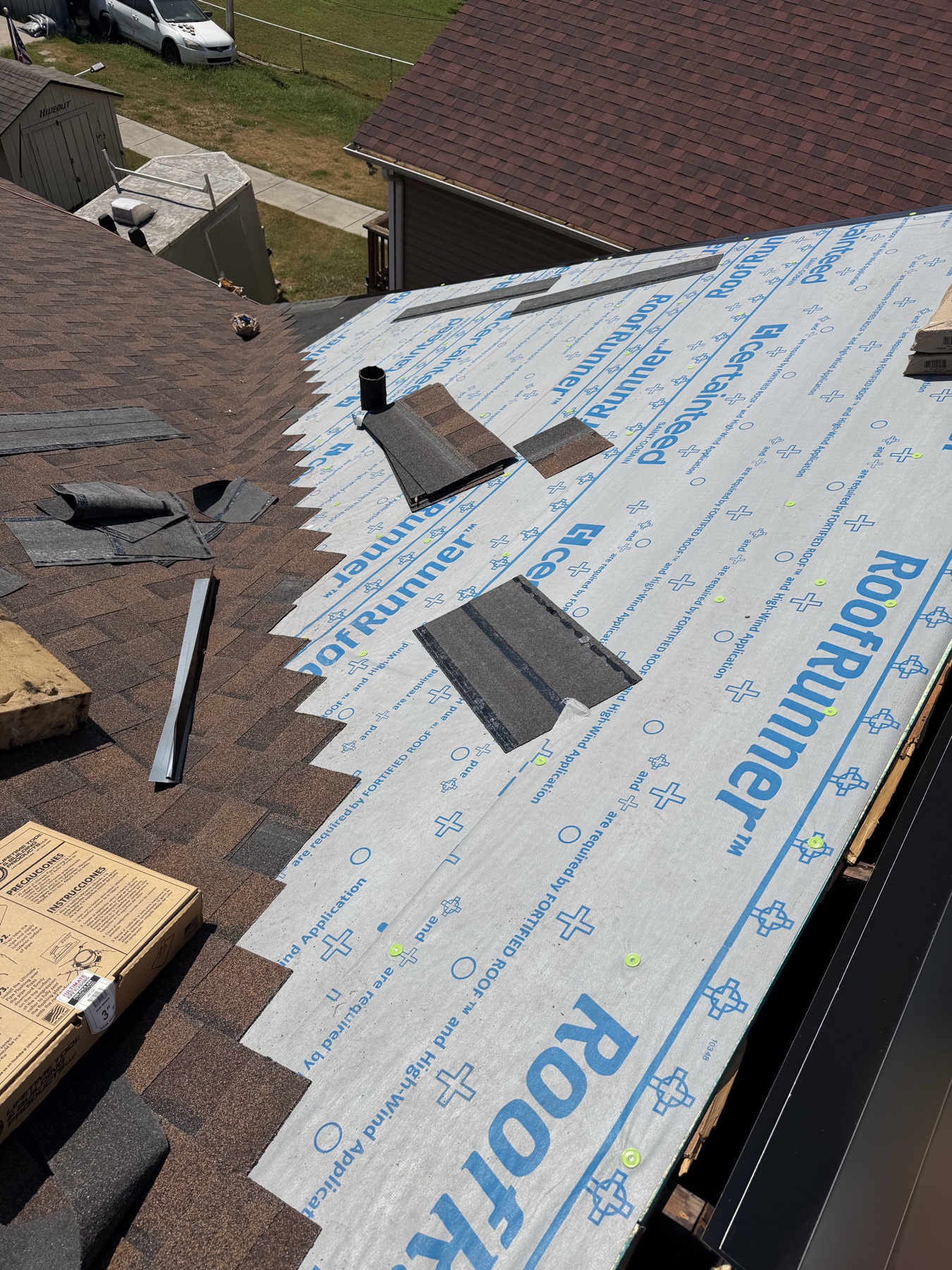
During a roof replacement, shingles are installed over underlayment. This wider project photo shows the layers, rather than the placement of individual roofing nails.
Depth Matters Along With Placement
A nail driven too far can damage the shingle around its head. A nail left too high can interfere with the shingle above it. Correct fastening means the nail is properly seated without cutting through the material.
GAF’s installation guidance discusses these risks. They illustrate why careful workmanship matters even when two proposals name similar materials. Most of that work disappears beneath the next course, so the finished color alone can’t tell you how the roof was fastened.
Sealant Helps Resist Lifting
Many asphalt shingles have factory-applied sealant that bonds overlapping shingles under suitable conditions. That bond helps resist wind lifting the exposed portions. It works with the fasteners as part of the designed roofing system.
Sealing isn’t necessarily instantaneous. Temperature and weather influence the process, and cold-weather installation can require additional measures specified by the manufacturer. The Asphalt Roofing Manufacturers Association recommends following those product-specific directions. A homeowner shouldn’t lift tabs to test the bond, since that can disturb the roof.
The Decking Must Hold Its End of the Bargain
Fasteners need a suitable base. Deteriorated or otherwise unsuitable decking can undermine an installation even when the shingles themselves are new.
During replacement, the exposed deck provides an opportunity to evaluate that base and address necessary work before it is covered again. Our explanation of roof decking shows why this less visible layer belongs in a replacement conversation. Ask how decking concerns will be documented and how additional work will be priced.
Request photos of the work while the deck and installation details are visible. Pictures won’t replace a qualified inspection, but they can document conditions and help explain decisions made during the job. Keep them with the product information and proposal so you have a useful record of what went into your roof.
Ask About the System Behind the Shingles
Useful questions include: Which installation instructions will the crew follow? How will they handle weather that affects sealing? What happens if the deck needs attention? Those answers are more meaningful than a vague promise to use extra nails.
At Mountain View Exteriors, we help East Tennessee homeowners understand their asphalt shingle roof replacement options. Contact us for a free inspection and a clear conversation about the materials and installation behind the finished roof.