
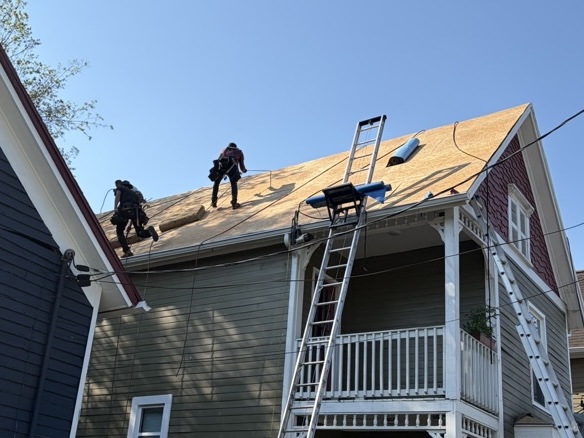
The worst roof problem is not always the missing shingle you can see from the yard. Sometimes the bigger issue is hiding underneath.
Roof decking is one of those parts of a roof most homeowners never think about until there is a problem. That makes sense. You see shingles, flashing, gutters, and vents. You usually do not see the wood layer below them.
Still, roof decking has a major job. If it is weak, rotten, warped, or uneven, a new roof can start with an old problem.
What Roof Decking Actually Is
Roof decking is the flat wood surface attached to your rafters or trusses. It is also called roof sheathing. Underlayment goes over it. Shingles, metal panels, flashing, vents, and other roof parts are installed above it.
On most modern homes, roof decking is made from plywood or OSB. Older homes around Knoxville, TN may have plank decking instead. That means individual boards were installed across the rafters rather than large sheets.
Plank decking can be fine in some cases. The condition matters. If the boards have wide gaps, heavy movement, rot, or uneven spots, they may not give the roof system the solid base it needs.
We recently saw this on a Downtown Knoxville roof decking project where the old plank decking was in bad shape. Full OSB sheathing was installed over the existing planks. That gave the roof a sound base again before the shingles went on.
Why Roof Decking Matters For A New Roof
A roof is more than shingles. Shingles shed water, but they depend on the layer beneath them.
Good roof decking helps shingles lie flat. It gives roofing nails solid wood to bite into. It also supports the underlayment, flashing, vents, and the weight of the roofing crew during installation.
Bad decking can cause several problems:
- Nails may miss solid wood or lose grip.
- Shingles may look wavy or uneven.
- Soft spots may form under the roof surface.
- Leaks may return if damaged wood stays in place.
- The new roof may not perform the way it should.
That is why we pay close attention to decking during an asphalt roof replacement. Covering a weak surface with new shingles does not fix the real issue. It just hides it again.
Why Decking Problems Are Often Hidden
Roof decking is covered by underlayment and roofing material. From the ground, everything may look normal. Even from the attic, some damaged areas can be hard to spot.
Most hidden decking problems show up during tear-off. Once the old shingles and underlayment come off, the wood can be checked more clearly.
Moisture is one of the biggest causes of decking damage. A small leak around a pipe boot, chimney, valley, skylight, or wall flashing can soak the same area over and over. Attic moisture can also attack the deck from below if ventilation is poor.
In Knoxville, TN, roofs deal with rain, humidity, storms, summer heat, and cold snaps. That mix makes the condition of the decking worth taking seriously.
What Happens If Bad Decking Is Found
If damaged decking is found, it should be addressed before the new roof is installed. The bad section may need to be cut out and replaced with new plywood or OSB. In some older homes, new sheathing may need to be installed over plank decking to create a smoother, stronger surface.
This is not about making the roof look nicer. It is about giving the roof system the base it needs.
A good roofing company should show you what was found. Photos help. Clear explanations help more. You should know why decking work is needed and how it affects the finished roof.
At Mountain View Exteriors, we care about doing the job the right way. That means looking beyond the shingles and paying attention to the structure underneath. If your roof is older, leaking, or ready for replacement, Contact Mountain View Exteriors and we can take a closer look.