
Gutter Systems
How Trees Around Your Home Affect Gutter Performance
You had the gutters cleaned, but the same corner is overflowing again. If your home sits beneath mature trees, the answer may be sitting farther up the roof.
Leaves and small branches can collect in roof valleys before rain carries them toward the gutters. A gutter that was clear last week can receive another load in one storm. Around tree-lined East Tennessee homes, good drainage depends on paying attention to that whole route.
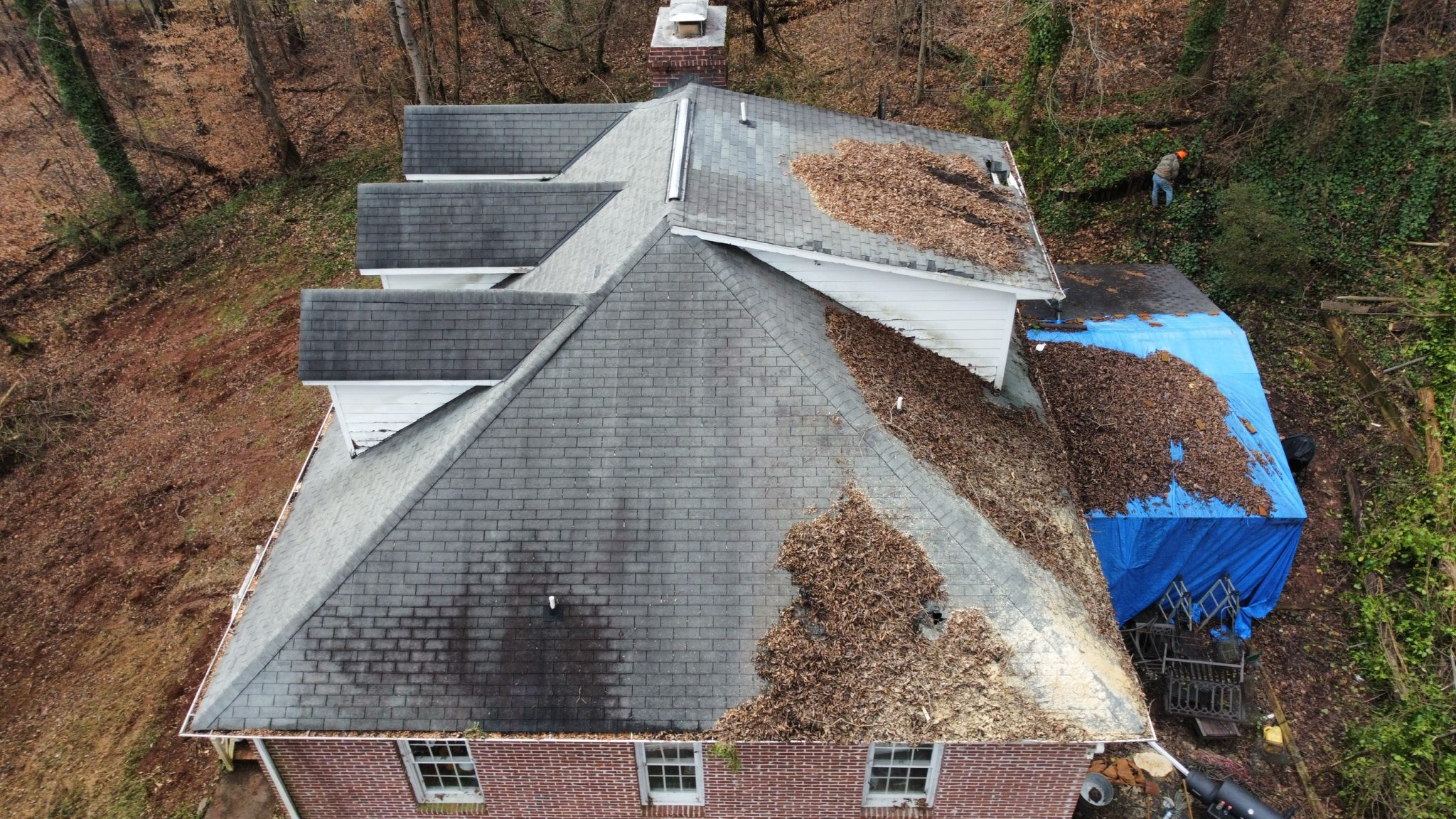
Leaves can collect on roof slopes and in valleys before washing toward the gutters.
The gutter catches what the roof sends it
Broad leaves can gather across a gutter opening. Needles, seeds, and small twigs can work into corners or collect around an outlet. Wet debris tends to settle into places where water already moves slowly.
Roof shape influences where it ends up. A valley can concentrate runoff and carry debris toward a short section of gutter. That corner may need attention well before a more exposed section on the other side of the house.
Look at the roof from the ground as well as the gutter edge. Visible piles above a porch or beside a dormer may be feeding a recurring blockage below. Clearing the gutter alone may leave that supply in place.
Watch what happens during ordinary rain
You can learn a lot from a safe, sheltered view of the house. Water spilling over one section may point to debris, a low spot, or an outlet problem. Water running behind the gutter suggests that its position or the roof-edge flashing needs a closer look.
The downspout is part of the same check. A clear gutter won’t drain well through a blocked outlet or downspout. Once water reaches the bottom, it still needs a suitable route away from the house.
These observations help narrow the question. They don’t prove that you need larger gutters. Our seamless gutter systems are planned around the roof and drainage needs, not just the width of the gutter channel.
Let your trees guide the maintenance schedule
A fixed twice-a-year reminder can be a useful starting point, but it may not match the debris around your house. Fall leaf drop can happen over several weeks. Spring seeds and small storm-damaged branches can create another round of buildup.
Arrange checks when your trees are shedding heavily and after storms that leave debris on the roof. If an outlet blocks repeatedly, note its location and what collects there. That information is more useful than assuming the whole system has failed.
Use a qualified person for cleaning that requires roof or ladder access. A wet pile of leaves can hide the footing beneath it, and reaching a problem corner from a ladder brings its own risks.
Gutter guards still need attention
A guard may reduce the amount of larger debris entering the gutter. It won’t make every type of leaf, needle, or seed disappear. Material can collect on top of a cover, and smaller particles may still need to be removed.
Ask how a proposed guard handles the debris from your trees, how the gutters will be accessed for cleaning, and what upkeep is expected. A cover also won’t correct a gutter that slopes the wrong way or a downspout that can’t drain the water reaching it.
Have a tree professional evaluate branches that brush the roof or hang close to it. Thoughtful pruning can reduce direct contact. Wind can still carry leaves to the house, so some gutter maintenance will remain.
Replace the gutter when its condition calls for it
If overflow continues after the debris and downspouts are cleared, have the system’s slope, attachment, and capacity evaluated. Sagging or separating sections deserve attention, too. Our explanation of gutters pulling away from the house covers those clues.
If replacement looks like the next step, talk with us about your project or call (865) 465-8056. We’ll help you consider the roof, the trees, and where the water needs to go.