
A gutter that used to sit neatly along the roof now has a gap behind it. Or one section hangs lower than the rest, right where rain keeps spilling onto your porch. Those changes are worth checking before the next heavy downpour.
Gutters pulling away from the house can have several causes. The attachment may be loose, the wood behind it may be damaged, or trapped debris and water may be adding weight. We’d want to find the cause before recommending a repair or replacement.
A new gap behind the gutter
Look along the gutter from the ground. A section that has shifted outward, especially near a loose fastener, is a more direct sign of separation than a water stain alone. Compare the area with neighboring sections and any older photos you have.
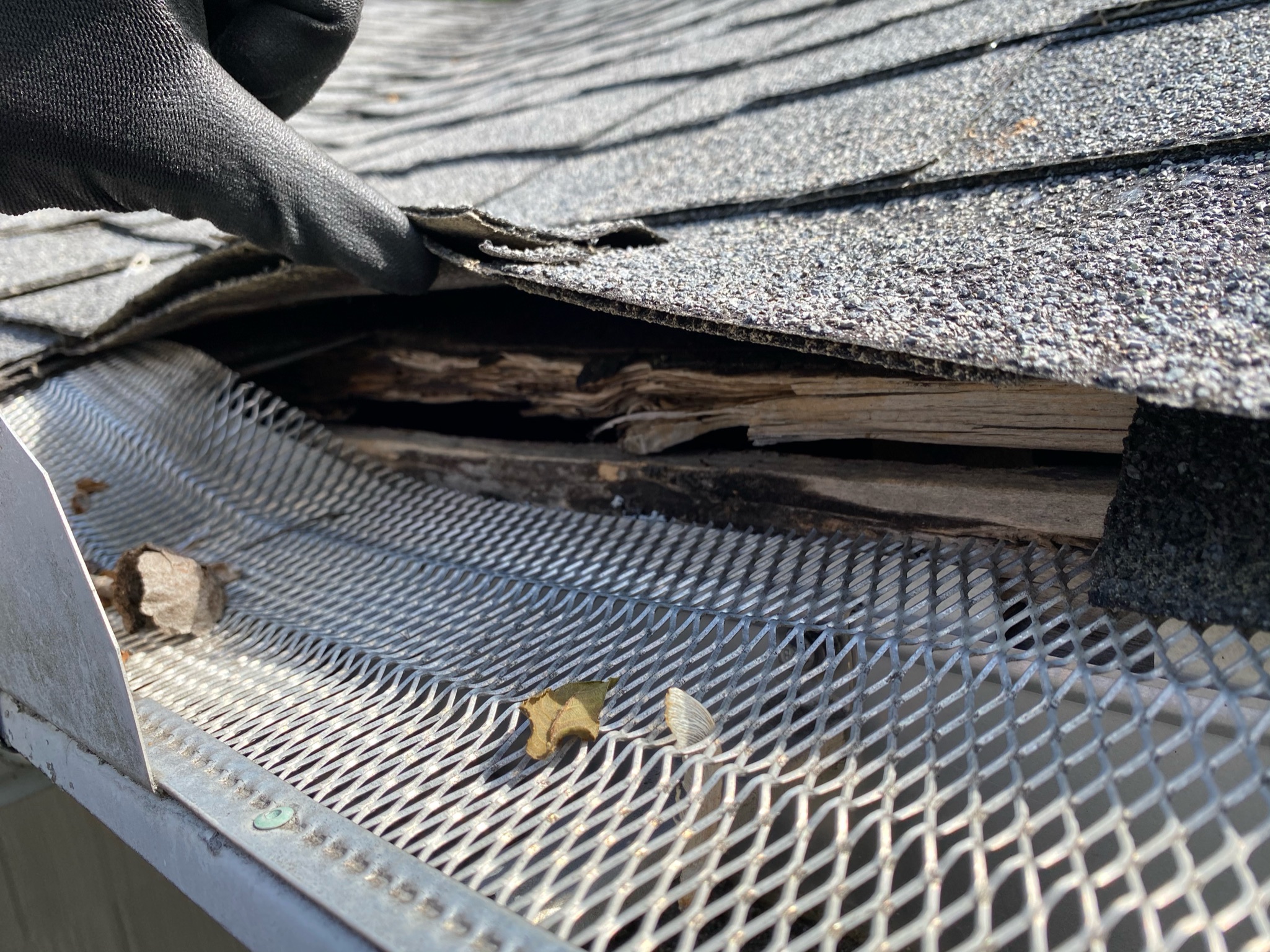
Older gutter spikes can work loose and allow the gutter to sag. Before reattaching it, have the fascia board checked for rot. The fascia is the board along the roof edge where many gutters attach.
Simply driving an old spike back into the same spot may leave the underlying problem unresolved. Ask the installer to explain what the replacement fasteners will hold into.
A dip or outward tilt in the gutter line
A gutter should slope toward its downspout. That planned slope is different from a sudden low spot in the middle of a run or a section tipping away from the house.
Proper slope helps move runoff toward downspouts so water can be carried away from the foundation. A noticeable dip deserves a closer look because the gutter needs a continuous drainage path.
Take a photo from a consistent spot so you can show an installer exactly where the line has changed. If the roof edge itself appears to sag, mention that too. The problem may extend beyond the gutter hardware.
Water escaping in the wrong place
During rain, watch from a sheltered location on the ground. Water falling between the gutter and the house can help identify an area that needs inspection. Repeated overflow at one low spot is another useful clue.
Overflow alone doesn’t confirm separation. Drainage problems can involve installation height, slope, or leaking connections. Clogs can also interrupt water flow. The point where water escapes helps an installer narrow down the cause.
Note if the problem happens during ordinary rainfall or only a particularly heavy downpour. That detail helps frame the inspection without asking you to climb a ladder or test the gutter yourself.
Damage around the attachment area
Peeling finishes or deteriorated-looking wood near a loose gutter deserve attention. They don’t prove how far damage extends, but they give the installer a reason to examine the support behind the gutter.
Ask for photos of any damaged wood and a clear explanation of what needs replacement. A quote should account for the support and drainage problem, along with the gutter itself. New metal won’t make weakened attachment points sound again.
What to do when you notice movement
Keep clear of a gutter that is hanging loose. Avoid pulling on it or resting a ladder against it. A professional can check the attachment, roof edge, slope, and downspouts together.
If replacement makes sense, we install six-inch seamless gutters with oversized downspouts for East Tennessee homes. We’ll explain the proposed work and give you a straightforward quote. Call Brad at Mountain View Exteriors at (865) 465-8056 to discuss what you’re seeing.