
A damp attic can make you picture rain slipping through a damaged shingle. But sometimes the moisture started inside your house. That distinction matters: stopping rain and controlling condensation require different solutions.
For East Tennessee homeowners, cool weather is a good time to understand the difference between a roof leak and attic condensation. The clues can help you describe what’s happening, even though they can’t replace a professional inspection.
Condensation Begins With Moisture and a Cold Surface
Think about the outside of a cold drink on a humid afternoon. Water collects when moist air meets a surface cold enough for condensation. In an attic, that surface may be the underside of the roof decking or exposed metal fasteners.
Warm indoor air can carry moisture through gaps around ceiling penetrations. A bathroom exhaust fan that ends inside the attic can add more. The Building America Solution Center explains why exhaust fans should discharge outdoors and their ceiling connections should be air sealed.
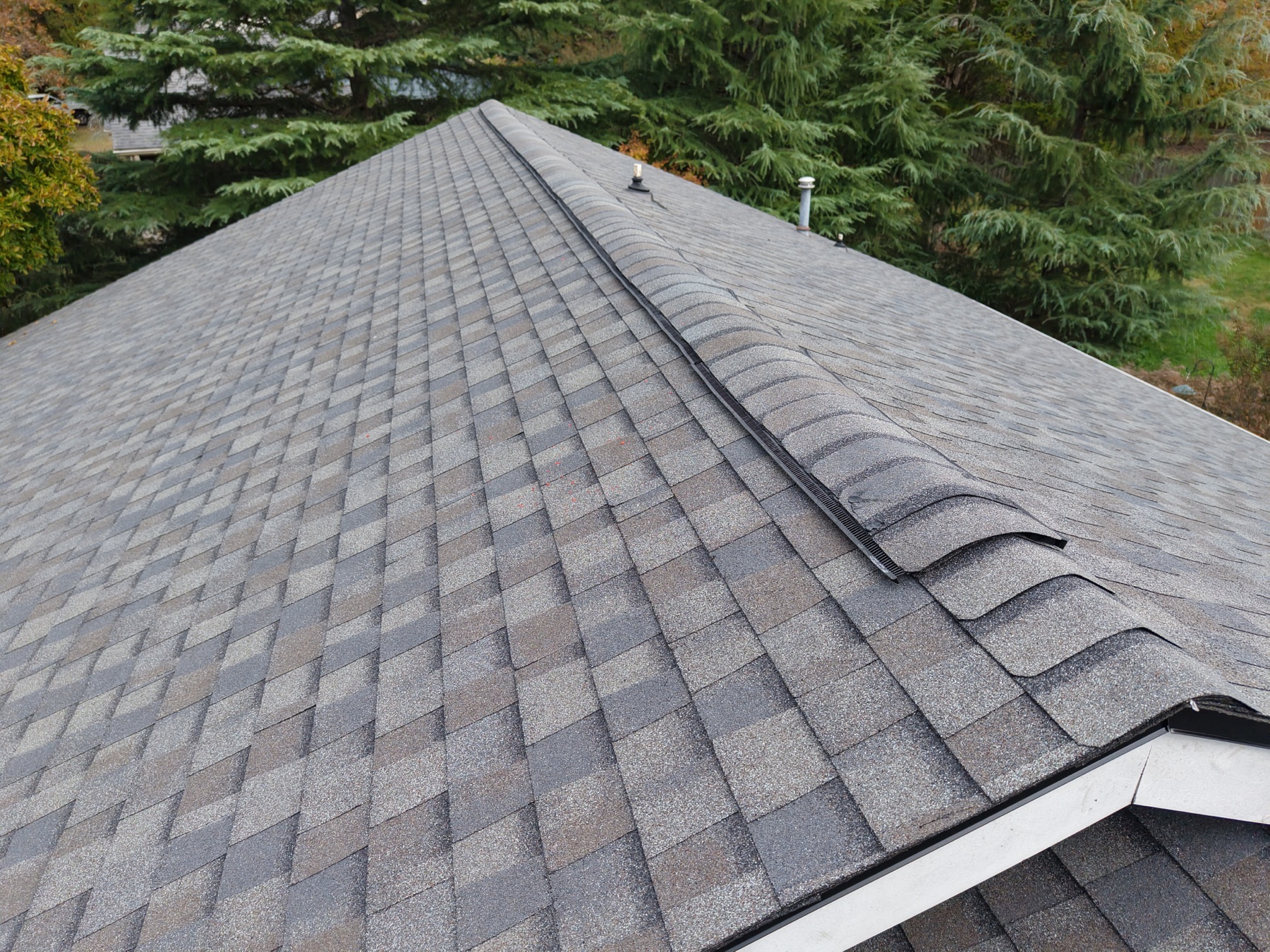
A finished ridge on a West Knoxville roof. Roof ventilation is one part of moisture management, alongside indoor humidity control and ceiling air sealing.
Timing Is a Clue, Not a Verdict
Moisture that appears during or shortly after rain deserves investigation for a roof leak. Wind direction can also matter when water enters at a vulnerable intersection or penetration.
Condensation may be more noticeable during cold weather, including periods without rain. Dampness spread across several areas can suggest a broader moisture issue, while a concentrated water trail may point toward a particular entry route. Neither pattern proves the cause by itself, and both problems can exist together.
More Ventilation Isn’t Always the Whole Answer
It’s easy to jump straight to adding a vent. But ventilation doesn’t fix a bathroom duct spilling moist air into the attic, and it doesn’t seal gaps in the ceiling below.
The Department of Energy’s attic air-sealing guidance treats air movement through the attic floor as an important part of moisture control. An evaluation should consider indoor humidity, exhaust ducting, air leakage, insulation, and roof ventilation together. The right professional can determine which work belongs to the roofing system and which belongs elsewhere.
Document What You Can See Safely
Write down when you first noticed the moisture and whether it followed rain, a cold night, or frequent indoor humidity. Photograph ceiling stains and any visible changes. Avoid walking on ceiling drywall or entering an attic with unsafe access, wet wiring, or questionable footing.
A roofer or building professional can inspect the decking, flashing, penetrations, and moisture patterns. Repainting a stain before that evaluation may hide a useful clue without solving anything.
Try keeping a short weather-and-moisture log for the inspection. A note such as “new dampness after two dry, cold nights” asks a different question than “spot grew during yesterday’s downpour.” You don’t need to solve the problem yourself to provide information that makes the investigation more useful.
Choose the Solution After the Diagnosis
A new roof shouldn’t be treated as a universal cure for attic moisture. If aging roofing is allowing water inside, roof replacement may address that part of the problem. If moisture comes from the living space, the plan must address that source too.
We help Knoxville-area homeowners understand their roofing condition and replacement options. Schedule a free roof inspection so your next step starts with evidence, rather than the first explanation that comes to mind.