
Roofing Basics
Why Roof Ventilation Matters More Than Homeowners Think
Your upstairs feels warm, so you wonder if the roof needs another vent. Or you notice a musty smell near the attic and start worrying about a leak. Both concerns deserve a closer look. Neither tells you, by itself, what needs to change.
Roof ventilation is easy to overlook because most of its work happens out of sight. In a vented attic, a clear path for outside air helps release built-up heat and moisture. When we’re talking through a roof replacement, that airflow deserves attention alongside the shingles.
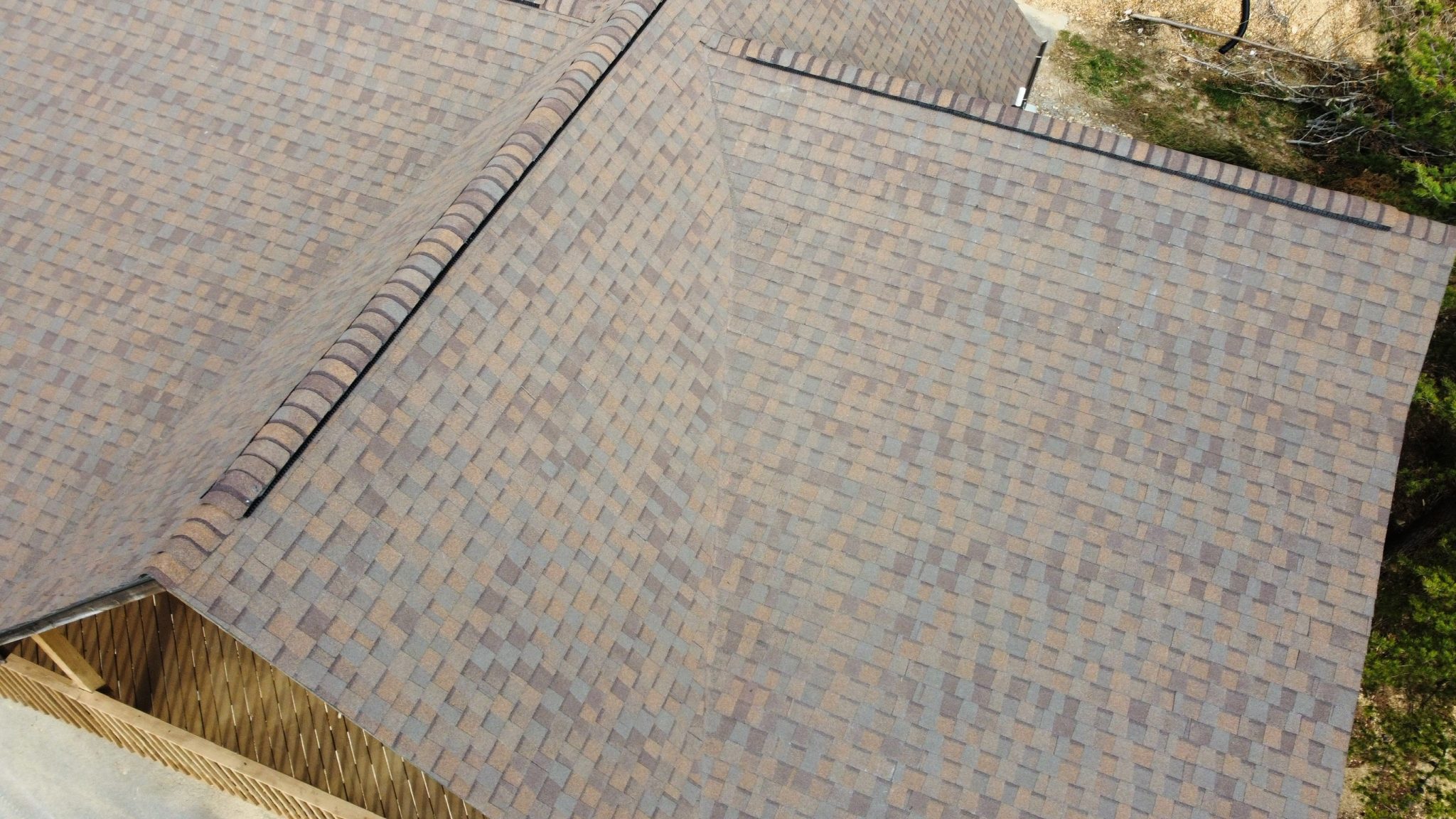
A roof ventilation review starts with the roof layout, then follows the airflow through the attic.
Air needs a way in and a way out
A typical vented attic takes in outside air near the lower roof edges. Soffit vents are one common intake location. Exhaust vents near the top of the roof let air leave. A ridge vent can provide that outlet along the roof peak.
Those openings need to work together. Adding exhaust won’t solve an intake path buried under insulation. You can have plenty of visible vents and still have poor airflow through parts of the attic.
Roof shape matters, too. A simple open attic differs from a home with dormers, additions, and separate attic spaces. The right plan accounts for those spaces instead of treating every roof as one open box. That’s one reason we think about asphalt roofing as a complete system.
Moisture can come from inside the house
A roof leak is one possible source of attic moisture. Warm indoor air escaping through ceiling openings is another. Bathroom exhaust that ends in the attic can add moisture where it doesn’t belong.
When that moisture reaches a cold surface, condensation can develop. Damp insulation or dark marks on roof decking need investigation, but they don’t automatically prove the shingles are leaking.
A useful assessment looks for the source of the moisture as well as a path for air to move. Otherwise, a new vent may leave the original problem in place.
Ventilation, insulation, and air sealing have different jobs
Insulation slows heat transfer between the attic and your living space. Air sealing limits unwanted air movement through the ceiling. Ventilation manages outside airflow within an attic designed to be vented.
More of one doesn’t make up for missing work on another. For example, adding insulation without keeping the eave intake clear can restrict airflow. Baffles can help maintain a passage above insulation where the roof design calls for them.
Some homes have intentionally unvented attic assemblies, often with insulation at the roofline. Those need a different approach. Adding vents without understanding that design can create problems rather than solve them.
What should make you ask for a closer look?
Repeated attic dampness, a persistent musty smell, or signs that intake openings are blocked are good reasons to ask questions. An upstairs that stays uncomfortable may also deserve an assessment, though windows, insulation, air leaks, and heating and cooling equipment can all play a part.
You don’t need to climb onto the roof to start the conversation. Describe what you’ve noticed and when it happens. A problem that appears after showers may point in a different direction from one that follows wind-driven rain.
During a replacement estimate, ask how intake and exhaust will be evaluated and which attic spaces they serve. Our overview of what to expect during a roofing project can help you prepare for that discussion.
Make ventilation part of the roof conversation
If you’re planning a new roof in East Tennessee, we’ll talk through the visible roof conditions and the ventilation questions that belong in your estimate. You can request a roofing estimate or call (865) 465-8056. We want you to understand the proposed work before you decide.