
A brown spot appears on your ceiling. You look straight up and imagine the damaged shingle sitting directly above it. That seems logical, but water doesn’t always follow the route we’d expect.
A ceiling stain marks where moisture became visible inside. It doesn’t necessarily mark where water entered the roof. Understanding that difference can save you from chasing the wrong spot while the actual problem continues.
Water Can Take the Long Way Down
Once water gets beneath the roof covering, it may follow decking, framing, or another surface before it drips. Insulation and ceiling materials can delay or spread the visible evidence. The stain you notice may be several steps removed from the original entry point.
Think of a spill running along the underside of a counter before dropping from an edge. Gravity is still working, but the surfaces along the way influence the route. GAF’s guide to roof vent pipe leaks explains why the visible indoor location can be misleading.
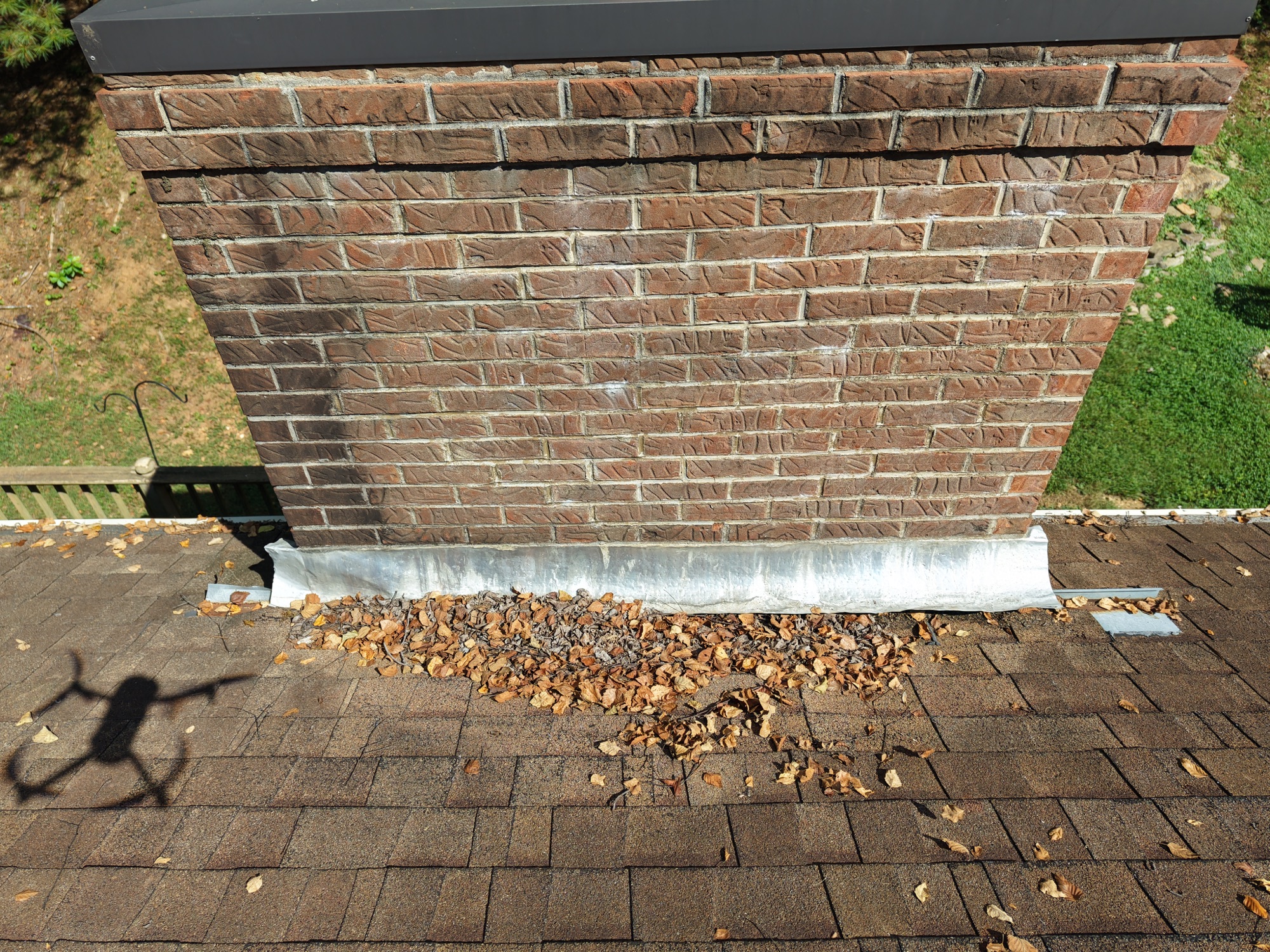
An earlier Powell project before replacement shows the roof intersection around a chimney.
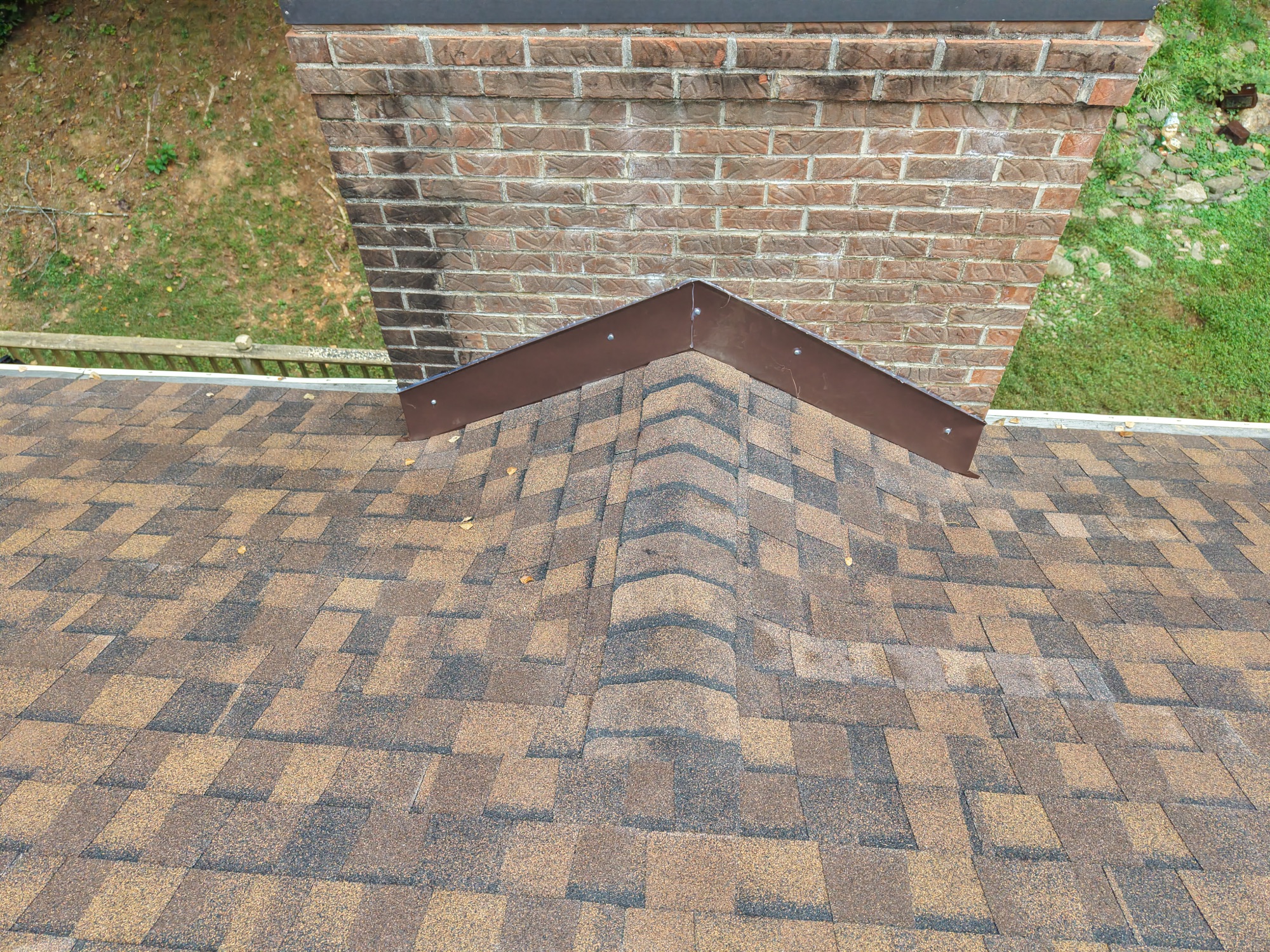
The same project after replacement, with new flashing and a chimney cricket. These intersections are important inspection points.
Shingles Aren’t the Only Places to Look
Chimneys, plumbing vents, roof valleys, and roof-to-wall intersections all interrupt the roof’s broad surface. Flashing helps direct water through or around those transitions. A problem there can matter even when the surrounding shingles appear ordinary.
That’s why an inspection should follow the evidence rather than begin and end with the shingle above the stain. Our guide to what roof flashing does explains the role of these less noticeable components.
A Stain Doesn’t Prove Rain Is the Source
Plumbing leaks, condensation, and other moisture problems can also discolor a ceiling. The timing helps narrow the questions. Did the spot grow after wind-driven rain? Does it change after an upstairs shower? Has it appeared during cold weather without a storm?
Write down what you observe without treating one clue as a diagnosis. An old, dry mark may reflect a past problem, while fresh dampness suggests active moisture. A professional can help distinguish those situations before you spend money on the wrong solution.
Keep a Simple Record
Take a clear photo and include enough of the room to show the stain’s location. Add the date, recent weather, and whether the area feels or looks different. Keep later photos from a similar angle so changes are easier to compare.
Don’t climb onto the roof to test your theory. Avoid wet electrical fixtures and stay clear of a bulging or sagging ceiling. Those conditions call for prompt professional attention, not a closer look from directly underneath.
Also mention earlier work near the affected area, such as a vent replacement or plumbing change. It may be relevant, or it may not. Providing the history lets the person investigating consider the possibilities instead of assuming the newest stain must have the same cause as an older one.
Follow the Cause Before Covering the Mark
Paint can hide discoloration, but it can’t stop the moisture that caused it. The useful question is what allowed water to reach that point and what work will address the source.
If the evidence points to an aging or failing roofing system, we can explain your roof replacement options. Schedule a free inspection with Mountain View Exteriors for your Knoxville-area home. Bring your photos and observations; they can help tell the part of the story the roof can’t show on a dry day.