
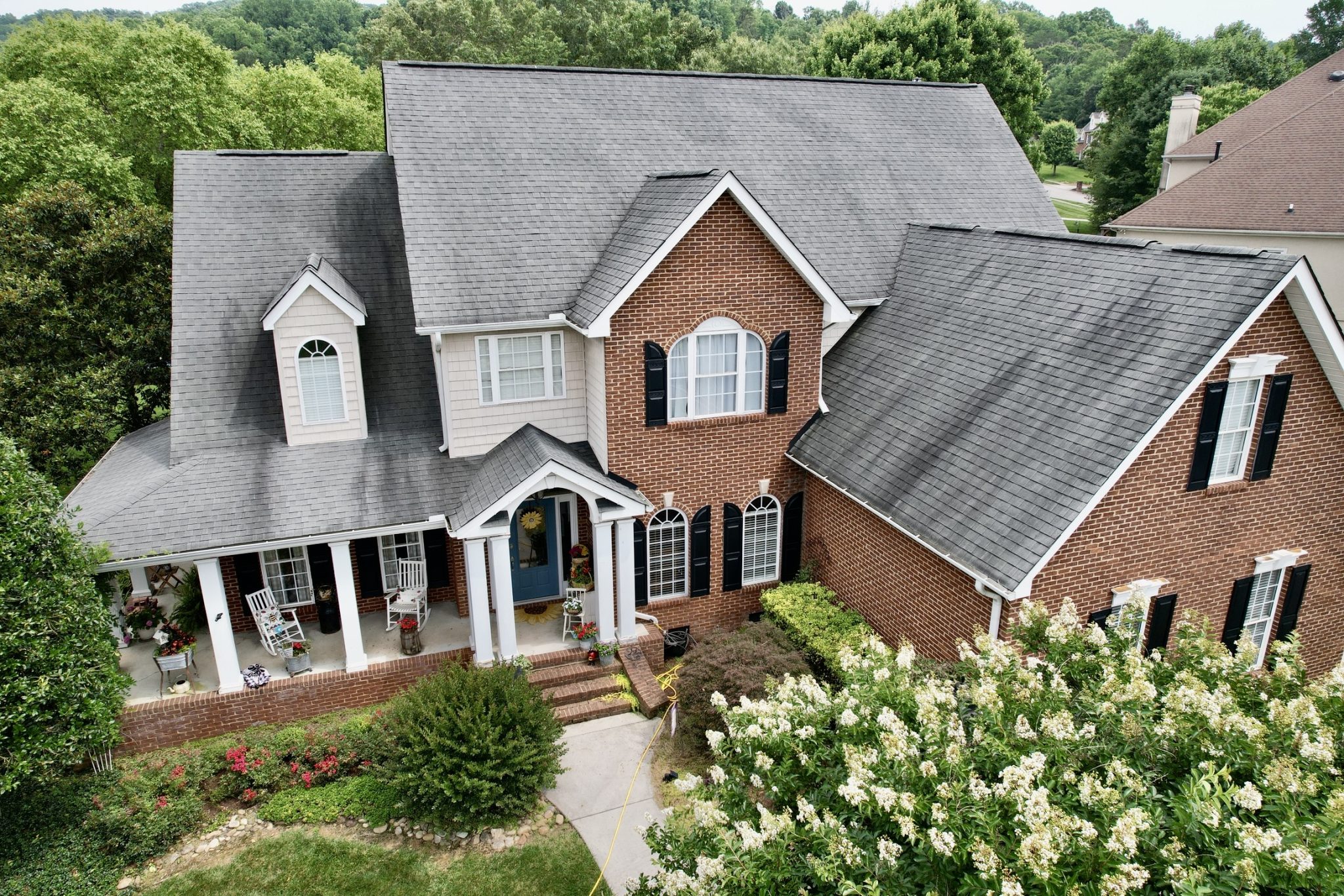
Sun exposure is quieter. It works day after day. By the time you see curling, cracking, or bald spots, your asphalt shingles may have been aging for years.
At Mountain View Exteriors, we look at sun exposure as part of the bigger roof picture. East Tennessee roofs deal with heat, humidity, rain, and summer temperature swings. All of that adds up.
How Asphalt Shingles Handle Sun Exposure
Asphalt shingles are built in layers. The asphalt layer helps shed water. The mineral granules on top protect the asphalt from direct sunlight.
Those granules do more than give your roof color. They act like armor. They help shield the asphalt from UV rays, surface heat, and day-to-day weathering.
That is one reason shingle quality matters. Different types of asphalt shingles handle aging in different ways. Older three-tab shingles tend to be thinner. Architectural shingles are thicker and usually offer better long-term performance.
Still, no asphalt roof is immune to the sun.
What UV Rays Do To Asphalt Shingles
UV rays slowly dry out and weaken asphalt shingles. At first, this may not look dramatic from the ground. The roof may still look fine from the driveway.
Over time, though, the asphalt begins to lose flexibility. The shingles can become brittle. Once that happens, they are more likely to crack, split, or break loose during normal weather.
Granule loss makes this worse. Once granules fall away, more sunlight reaches the asphalt underneath. That exposed asphalt ages faster. You may notice dark bald spots, uneven color, or piles of granules near downspouts.
A few loose granules are normal on many roofs. Heavy or uneven granule loss is different. That is a good reason to schedule a roof inspection.
What Heat Does To Your Roof
Sun exposure is not only about UV rays. Heat also wears on your roof.
On a sunny summer afternoon, roof surfaces can get far hotter than the air temperature. Dark asphalt shingles absorb heat. Then, as the sun goes down, the roof cools again.
That daily heating and cooling cycle causes expansion and contraction. Over many seasons, it can stress shingles, seals, nails, flashing, and the roof deck below.
This is where you may start to see:
- Shingles curling at the edges.
- Cracks across the surface.
- Loose or lifted tabs.
- Worn areas near valleys or ridges.
- Granules collecting in gutters.
These signs do not always mean you need immediate asphalt roof replacement. They do mean the roof deserves a closer look.
Why Knoxville Roofs Take A Beating
Knoxville summers bring real roof stress. We get hot afternoons, humid nights, pop-up storms, and plenty of rainfall through the year.
That mix matters. Sun can make asphalt shingles brittle. Then storms test those same shingles with rain and wind. A roof that handled weather fine years ago may start to show weakness as it ages.
Shade can help certain roof slopes age slower. South-facing and west-facing slopes often get more direct sun. Those areas may show curling, fading, or granule loss before other parts of the roof.
That is why we do not judge a roof from one small spot. We look at the whole system.
Why Ventilation And Installation Matter
Sun hits the roof from above. Trapped attic heat can add stress from below.
Good attic ventilation helps hot air and moisture escape. Without it, shingles may age faster. Moisture can also create other problems inside the roofing system.
Installation matters too. A quality roof is more than a good-looking shingle. It includes underlayment, flashing, starter shingles, ridge caps, ventilation, and proper nailing.
As a local roofing contractor, we pay attention to those details because they affect how your roof holds up after years of East Tennessee weather.
When Sun Damage Points To Replacement
One cracked shingle is different from widespread aging. A few worn areas may need monitoring. A roof with curling, brittle shingles, bald spots, repeated blow-offs, or stains inside the home may be closer to the end.
At that point, an asphalt shingle roof replacement may make more sense than chasing temporary fixes. A full tear-off also gives us a chance to check the roof deck, flashing, and ventilation.
You can also review what to expect during roof replacement before making a decision.
Get A Straight Answer About Your Roof
Sun exposure is part of normal roof aging, but you should not have to guess where your roof stands. If your shingles look worn, curled, or thin, we can take a closer look and explain what we see.
You can request a roofing estimate and ask about our roofing warranty coverage while you compare options. We will give you a clear answer and help you choose the right next step for your home.