
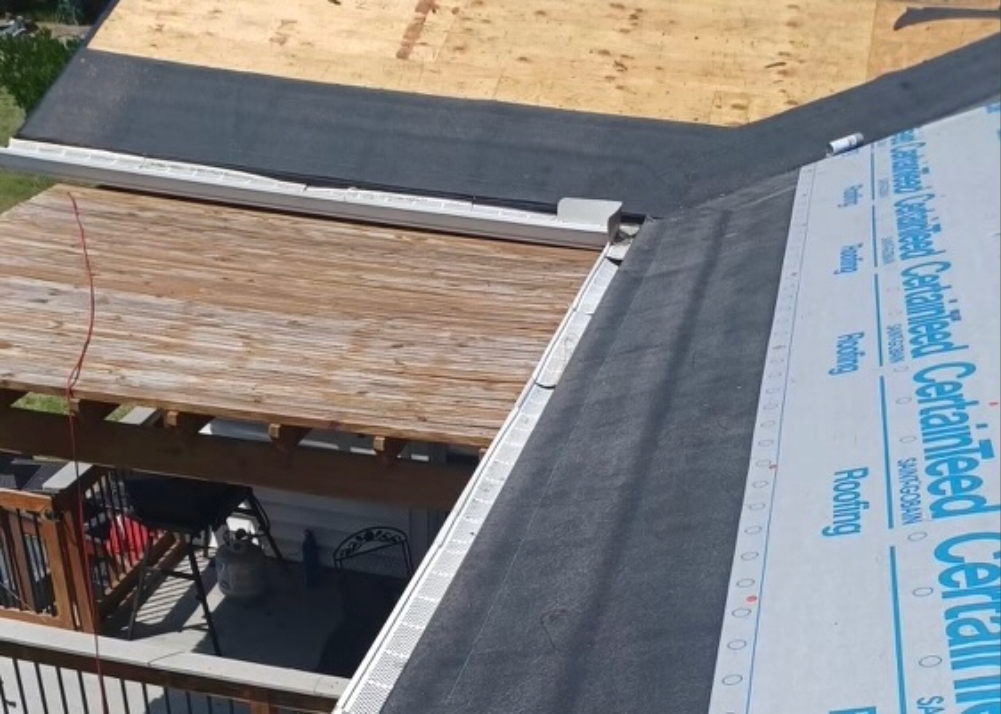
What Roof Underlayment Does for Your Home
Your shingles get most of the attention. They are the part you see from the driveway, and they play a big role in how your roof looks. But the layers beneath those shingles matter just as much.
Roof underlayment sits between the roof deck and the shingles. It helps protect the wood deck from moisture if wind-driven rain, backed-up water, or storm damage lets water get past the outer roofing layer. In East Tennessee, that backup layer matters.
Knoxville roofs deal with heavy rain, humid summers, hot roof surfaces, storms, tree cover, and occasional freezing weather. A good roof needs more than a clean row of shingles. It needs the right layers working together.
What Is Roof Underlayment?
Roof underlayment is the protective sheet material installed over the roof deck before the shingles go on. The roof deck is usually plywood or oriented strand board. That deck supports the whole roof system.
Your shingles shed most of the rain. Underlayment gives your home a second layer of roof leak protection.
If a shingle lifts, cracks, or loses its seal during a storm, water may reach the underlayment before it reaches the wood. That can make a real difference. Moisture in the roof deck can lead to soft spots, staining, rot, and interior leaks.
That is why we look at the full system during an asphalt roof replacement. The visible shingles matter. The hidden layers matter too.
Why Your Roof Needs More Than Shingles
Shingles are the first layer of defense. Roof underlayment is the backup.
This matters because roofs are rarely tested by calm, straight-down rain only. In Knoxville, storm wind can push rain under shingle edges. Valleys can carry a lot of water at once. Shaded areas may hold moisture longer. Low-slope sections drain more slowly.
Underlayment helps with several parts of roof performance:
- It sheds water beneath the shingles.
- It helps protect the roof deck from moisture.
- It creates a cleaner surface below the shingles.
- It adds protection during the roof installation process.
- It supports the roof system as a whole.
Synthetic roof underlayment has become common because it is lighter and tougher than traditional felt. It is usually more resistant to tearing, wrinkling, and roof traffic during installation.
Felt, Synthetic, And Ice And Water Shield
Homeowners often hear the word underlayment and assume it all means the same thing. It does not.
Traditional felt underlayment, sometimes called felt paper, has been used for years. It is usually less expensive. The downside is that felt can absorb moisture, wrinkle, and tear more easily.
Synthetic roof underlayment is a modern option used on many asphalt shingle roof projects. It is water-resistant, durable, and easier for crews to handle. Many synthetic products have slip-resistant surfaces that help during installation.
Ice and water shield is different. It is a self-adhered waterproofing underlayment used in areas where leaks are more likely. It can seal around nails and help protect valleys, eaves, skylights, chimneys, and other roof penetrations.
A roof may need both a water-resistant synthetic layer and waterproofing underlayment in vulnerable spots. The right approach depends on roof pitch, product requirements, local code, and how your roof is built.
Where Extra Leak Protection Matters Most
Some roof areas work harder than others. Valleys collect water from two roof planes. Eaves can be exposed to water backup. Chimneys, skylights, and vent pipes all interrupt the roof surface.
Those areas deserve close attention during a roof replacement.
We want homeowners to understand what is happening beneath the shingles before work begins. Brad stays hands-on with the quoting process because the details matter. A clear roof estimate should explain more than the shingle color and price. It should help you understand the roof deck, flashing, ventilation, underlayment, and warranty options.
That kind of detail helps you make a better decision before crews ever arrive.
Why Installation Matters As Much As Material
Good material can still fail if it is installed poorly. Underlayment has to be lapped correctly. It needs the right fasteners. It has to work with flashing, starter shingles, ventilation, and the roofing product above it.
That is one reason we like complete roofing systems. CertainTeed, for example, treats underlayment as part of its full Integrity Roof System. Products like RoofRunner, DiamondDeck, and WinterGuard all have different jobs beneath the shingles.
RoofRunner and DiamondDeck provide water-resistant protection over the roof deck. WinterGuard gives extra waterproofing protection in leak-prone areas. Together, these layers help the roof handle real weather, not just normal daily conditions.
A Better Roof Starts Beneath The Shingles
Your roof protects your home every day, but the most important parts are not always easy to see. Roof underlayment helps protect the deck, reduce leak risk, and support the full roofing system.
If your roof is getting older, your next estimate should explain what is going on beneath the shingles. You can get a roofing quote from Mountain View Exteriors, or contact our Knoxville roofing team with questions about your roof.