
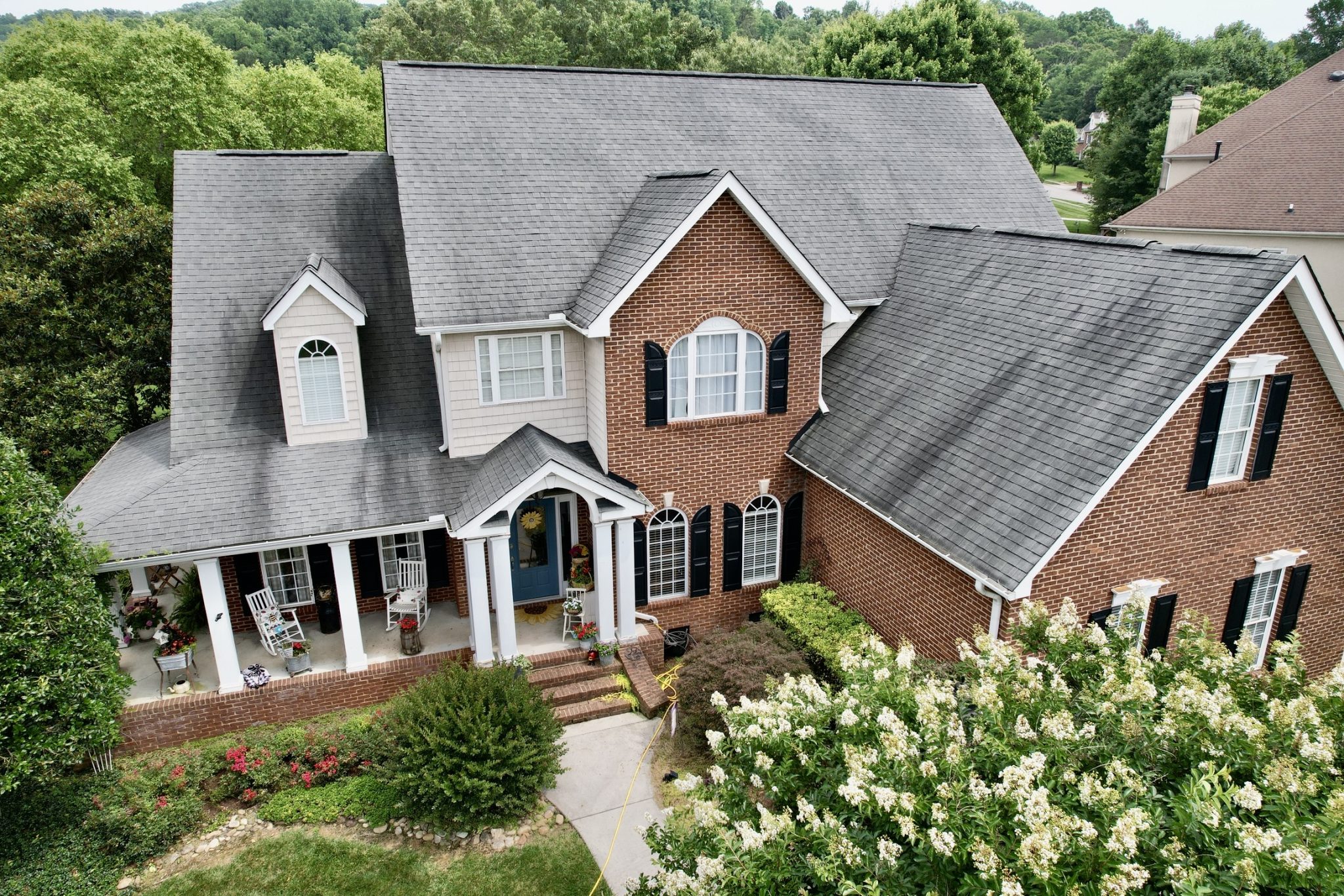
You may first notice curling roof shingles while standing in the driveway. A few edges look like they are turning upward. Maybe some corners no longer sit flat. It is easy to assume the roof is failing, but curling does not always mean you need an immediate roof replacement.
Curling is better viewed as a clue. It tells us something is changing in your roofing system. The amount of curling, the age of the roof, and other visible damage help us figure out what is happening.
What Causes Asphalt Shingles to Curl?
Normal aging is one of the most common causes. Asphalt shingles spend years exposed to sunlight, heat, rain, cold, and daily temperature changes. Over time, the asphalt layers can shrink. That can cause the edges of a shingle to turn upward slightly.
A small amount of curling can be part of normal weathering. This is especially true on an older asphalt shingle roof that still has good granule coverage and no other obvious problems.
Heat and sunlight also play a role. Roof surfaces can become much hotter than the surrounding air. Repeated heating and cooling gradually changes the roofing material.
Here in Knoxville, roofs get plenty of that exposure. We average nearly 52 inches of rain each year. Summers bring plenty of 90-degree days, while winter temperatures regularly fall below freezing.
Curling Can Point to Other Roofing Problems
Age is not the only explanation. Raised shingles can sometimes be caused by wind. Strong gusts can catch the edge of a shingle and lift it. A crease across the shingle tab can be a sign that wind has broken the seal.
Moss can create another problem. Thick moss growth can physically lift shingle edges and make them more vulnerable to wind.
Ventilation can also be part of the picture. Excessive attic heat and moisture may contribute to premature roof deterioration. That is one reason a good roof inspection looks beyond what you can see from the ground.
There is another distinction worth making. Curling and buckling are different problems. Curling usually happens at shingle edges or corners. Buckling often looks like waves or raised lines running across several shingles. That can point to movement in the roof decking or wrinkles beneath the shingles.
When Curling Becomes More Concerning
One slightly curled corner is very different from widespread deterioration. We pay more attention when curling appears alongside other signs of aging.
Those signs can include:
- Brittle or cracked shingles.
- Heavy granule loss.
- Missing or loose shingles.
- Exposed asphalt.
- Water staining or active leaks.
Widespread curling combined with these problems may mean your roof shingles are getting close to the end of their useful life.
Curling that appears suddenly after a storm also deserves attention. In that case, we want to rule out wind damage rather than assuming the change happened slowly over time.
Does a Curling Roof Need to Be Replaced?
There is no automatic answer. A few damaged shingles on an otherwise healthy roof can mean something very different from curling across several slopes of an older roof.
If deterioration is widespread, replacing a few shingles does not change the condition of everything around them. That is where a full roof replacement may make more sense.
The condition of the roofing system also affects warranty considerations. Our roofing warranty information explains the protection available with the systems we install.
At Mountain View Exteriors, we look at the whole roof before recommending the next step. Curling shingles may simply be showing their age. They may also be telling you that larger problems are developing. If you are seeing curling across your roof, you can contact Mountain View Exteriors so we can take a closer look and give you a clear answer.