
You’ve found a shingle sample you love. Then you see a roof in the same color, and it looks surprisingly different. Did someone bring out the wrong sample?
Not necessarily. Choosing a roof color means judging a textured surface that will cover a large, sloped area outdoors. A small sample is useful, but it can’t recreate the entire view from your driveway. Light, scale, and the colors around it all influence the finished impression.
Sunlight Changes the First Impression
A roof in bright afternoon light can appear different from the same roof under clouds or in shade. Shadows also emphasize the texture of dimensional shingles, changing which parts of a color blend catch your eye.
That’s why we encourage homeowners to look more than once. Set the sample outside in daylight, then revisit it when conditions change. CertainTeed also notes that lighting affects the appearance of installed shingles. One quick indoor look leaves out a large part of the picture.
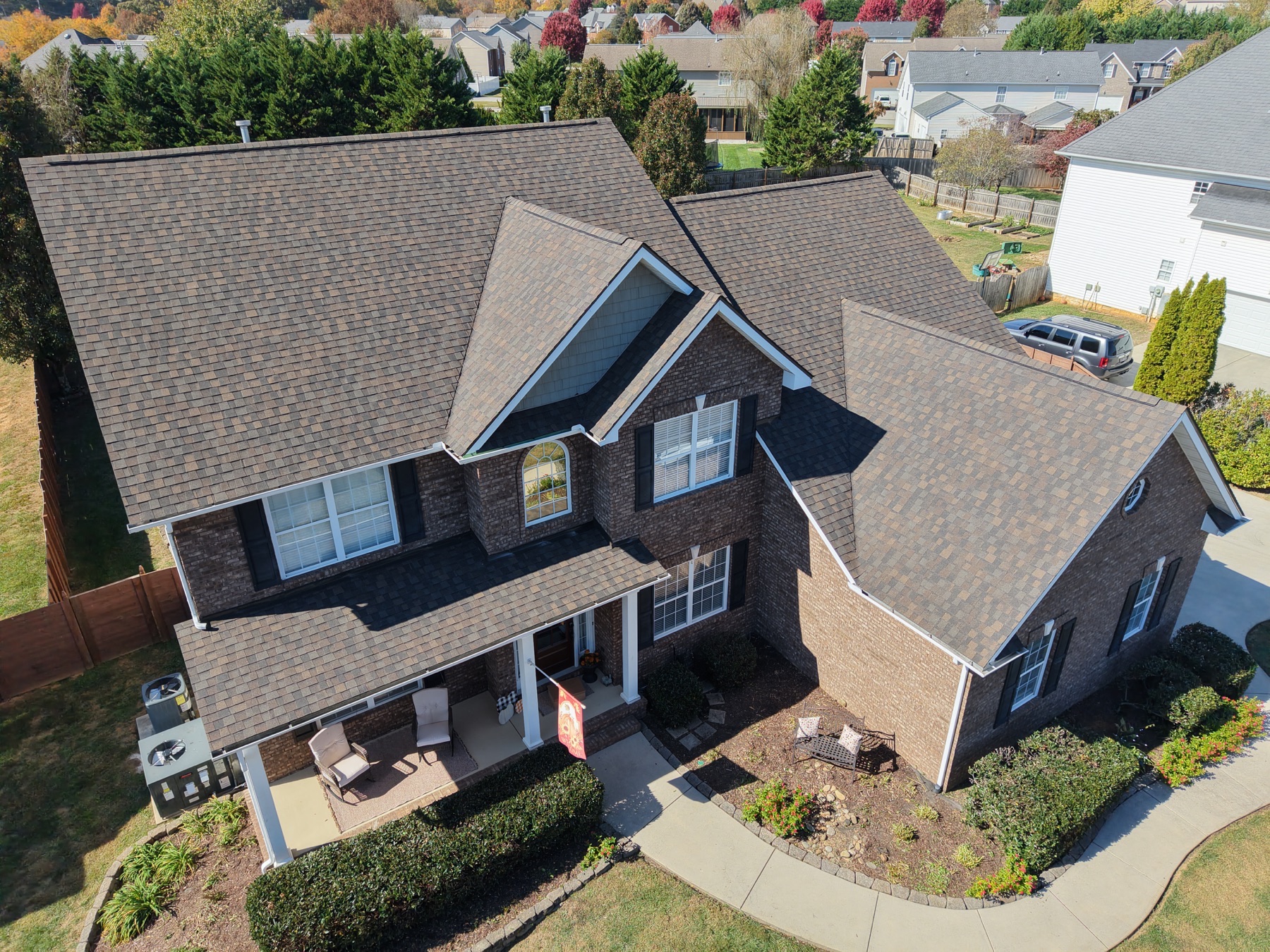
Landmark PRO Shenandoah shingles viewed from the front of this Fountain City home.
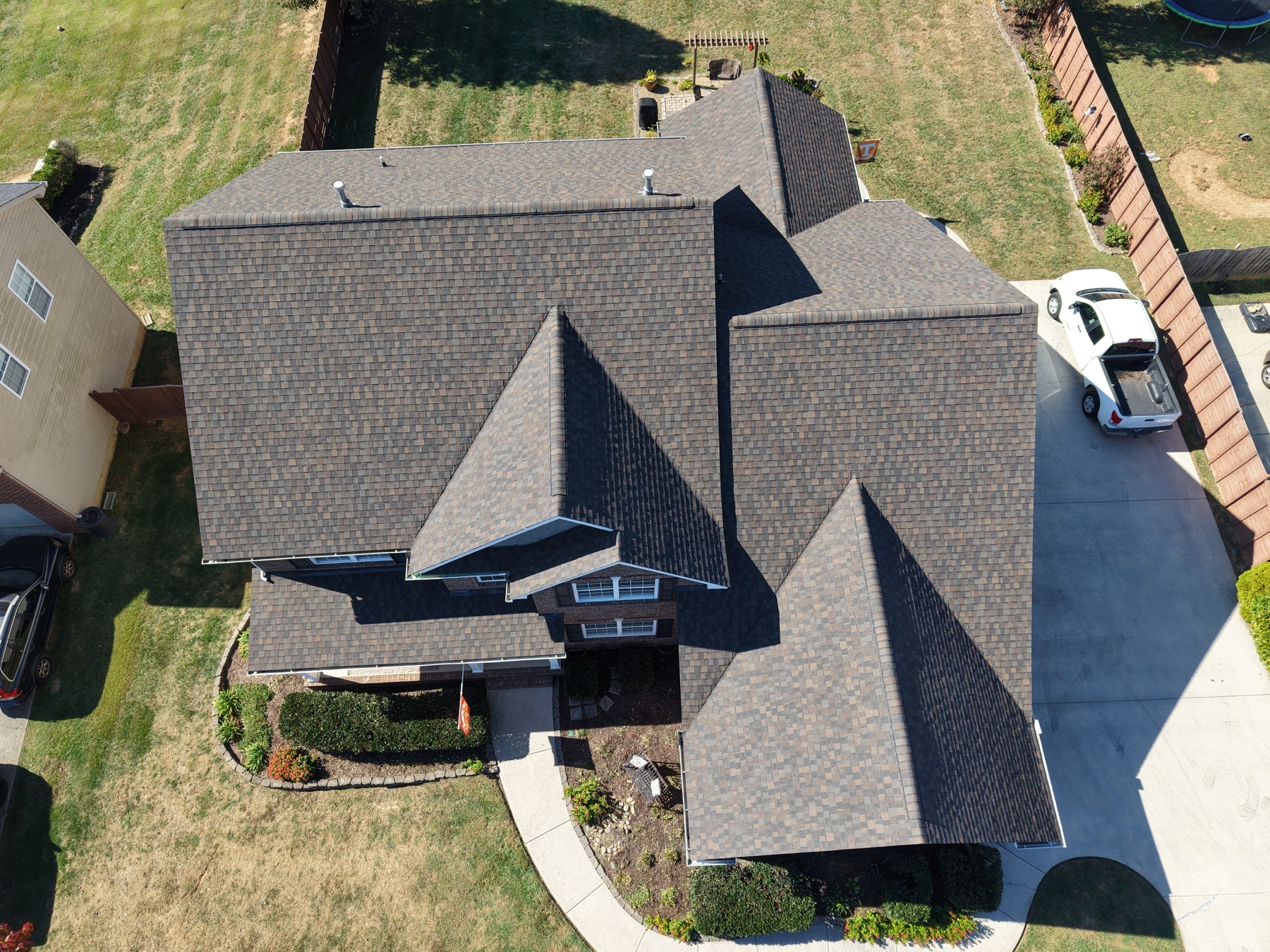
An overhead view of the same roof reveals more of the shingle blend and the different slopes.
A Blend Looks Different Across a Whole Roof
Many architectural shingles combine several granule colors. Up close, you notice individual flecks. From farther away, your eye reads a broader pattern, with some tones standing out more than others.
Imagine choosing a patterned fabric from a tiny corner. That corner is real, but it doesn’t show how the pattern repeats. A larger shingle display or a completed roof gives you a better sense of the overall balance than a single small piece.
Your Brick and Trim Join the Conversation
The roof doesn’t sit against a blank background. Brick, stone, siding, trim, landscaping, and even nearby shade affect how you perceive it.
A warm blend may echo the brown tones in your brick. A darker gray may create a stronger outline against white trim. Neither choice is automatically better. Stand far enough back to consider the entire house, including exterior elements you plan to keep. Comparing samples next to those materials is more useful than comparing them on a kitchen countertop.
Use Screens to Narrow the List
Online photos and visualizers can help you discover combinations you hadn’t considered. They also depend on the photograph, the lighting, and your screen’s settings. Treat them as planning tools rather than exact color guarantees.
When possible, compare an actual current product sample with an installed example. Confirm the manufacturer, shingle line, and color name; similar names can belong to different products. Our East Tennessee roofing project photos are a useful starting point for that conversation.
When you review project photos, compare similar viewpoints. A close aerial image highlights texture, while a ground-level view better reflects your everyday experience. If the front of your home spends much of the day in shade, make sure your final comparison includes a shaded view too.
Make a Shortlist You Can Explain
Choose two or three options and write down what you like about each. Does one complement the brick? Does another create the contrast you want? Clear reasons make the final decision easier than chasing a perfect match to one photograph.
We’re happy to walk through asphalt shingle replacement options with you. Contact Mountain View Exteriors for help choosing a roof color that works with your Knoxville-area home, in the real light where you’ll see it every day.