
Gutter Systems
Should You Replace Gutters When You Replace Your Roof?
You’re already investing in a new roof. Should gutters be part of the same project, or can they wait?
You don’t automatically need to replace gutters when you replace your roof. Gutters that are securely attached, in good condition, and draining properly may have useful years left. The better question is how well the existing system will work with the roof once the job is done.
We’d rather help you make that decision from the condition of your house than add another line to an estimate without a clear reason.
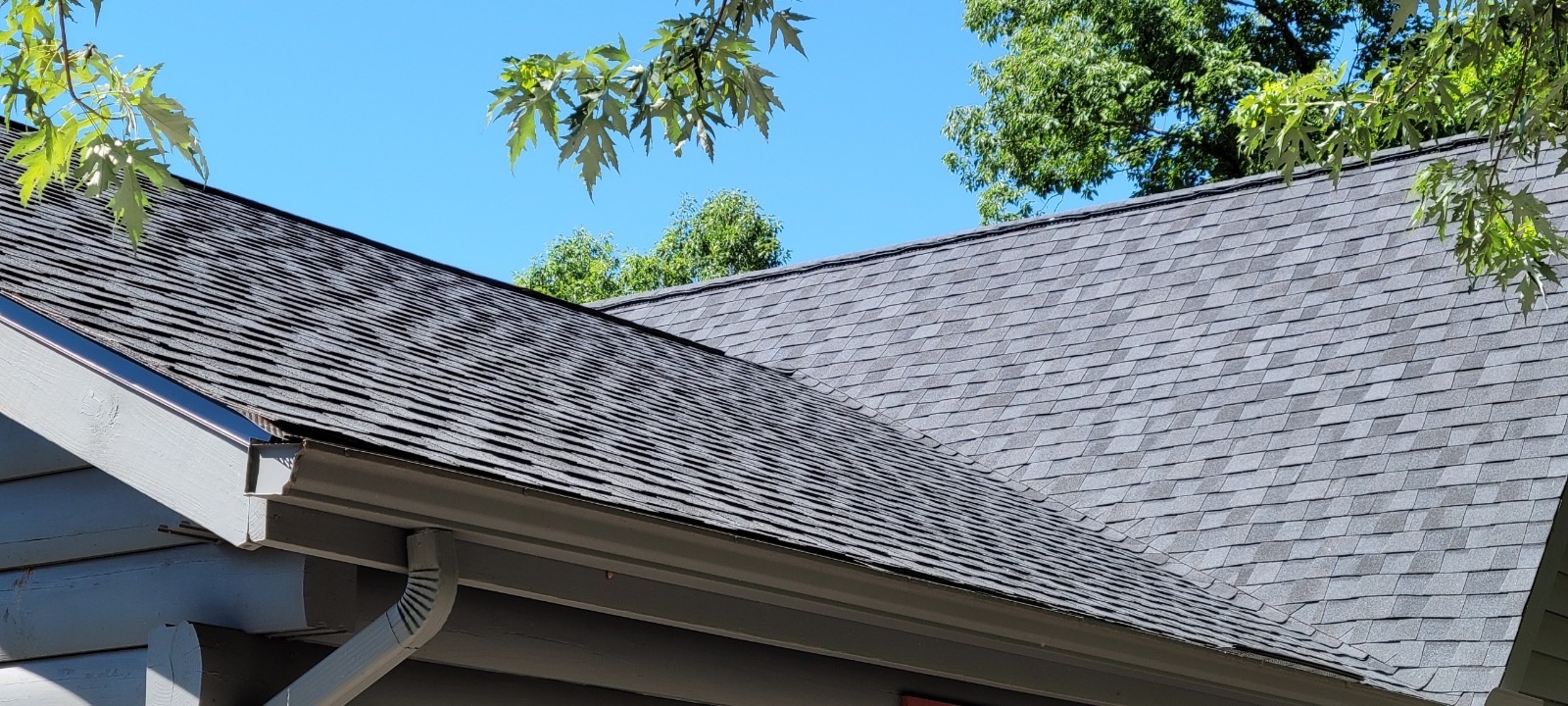
The roof edge, gutter, and downspout all have a part in directing rainwater away from the house.
Start with how the gutters perform
Think about the last few heavy rains. Did water reach the downspouts, or did it spill over the same corner? Have you noticed leaking joints, sections pulling away, or a low spot that holds water?
A clog can cause overflow in an otherwise serviceable gutter. Cleaning and checking the drainage may solve that problem. Widespread rust, cracks, repeated leaks, or badly distorted sections are stronger reasons to consider replacement.
Attachment matters as much as appearance. A gutter may look fine from the driveway but be fastened to deteriorated fascia. New gutters won’t fix that supporting wood unless the scope includes the needed work.
Look at the roof edge as one connection
Roofing sheds water toward the eaves. Edge flashing helps move that water into the gutter. The gutter then carries it to a downspout, and the discharge needs a suitable route away from the house.
If one connection is wrong, replacing another component may leave the problem behind. Water getting behind a gutter, for instance, calls for a look at the flashing and gutter position rather than an assumption that the entire gutter is worn out.
During a roof replacement project, ask how existing gutters will be protected. Also ask if any sections need to come down for access to the fascia or roof edge. The answer depends on the existing installation and the work required.
When doing both together makes sense
If the gutters already need replacement, coordinating the projects can make the sequence easier. The crew can address roof-edge and fascia work before the final gutter installation. It also gives you a chance to choose a gutter color that works with the new shingles and trim.
Ask for the roofing and gutter costs to be identified separately. A combined project may simplify coordination, but it doesn’t guarantee a discount. Clear pricing lets you judge each part on its own merits.
Our seamless gutter options include six-inch gutters with 3-by-4-inch downspouts. The right layout still depends on the roof area feeding each section, the outlets, and where the water goes after it leaves the downspouts.
When keeping the gutters is reasonable
Recently installed gutters that drain well don’t become obsolete because you change shingles. Keeping them can be a sensible way to focus the budget on work the roof actually needs.
Before you decide, have the estimate spell out the plan. That includes protecting the gutters during tear-off, handling any necessary removal and reinstallation, and addressing damage discovered at the fascia. It also helps to agree on who checks the drainage when the work is complete.
If you plan to replace the gutters later, mention that now. The roofing details should work with the existing system in the meantime, and you should understand any extra work a later replacement might involve.
Let the condition guide the scope
We can look at the roof and gutters together and explain where replacement makes sense. Start with a roofing estimate or call Mountain View Exteriors at (865) 465-8056. You’ll have a clearer picture of what needs attention now and what may be able to stay.