
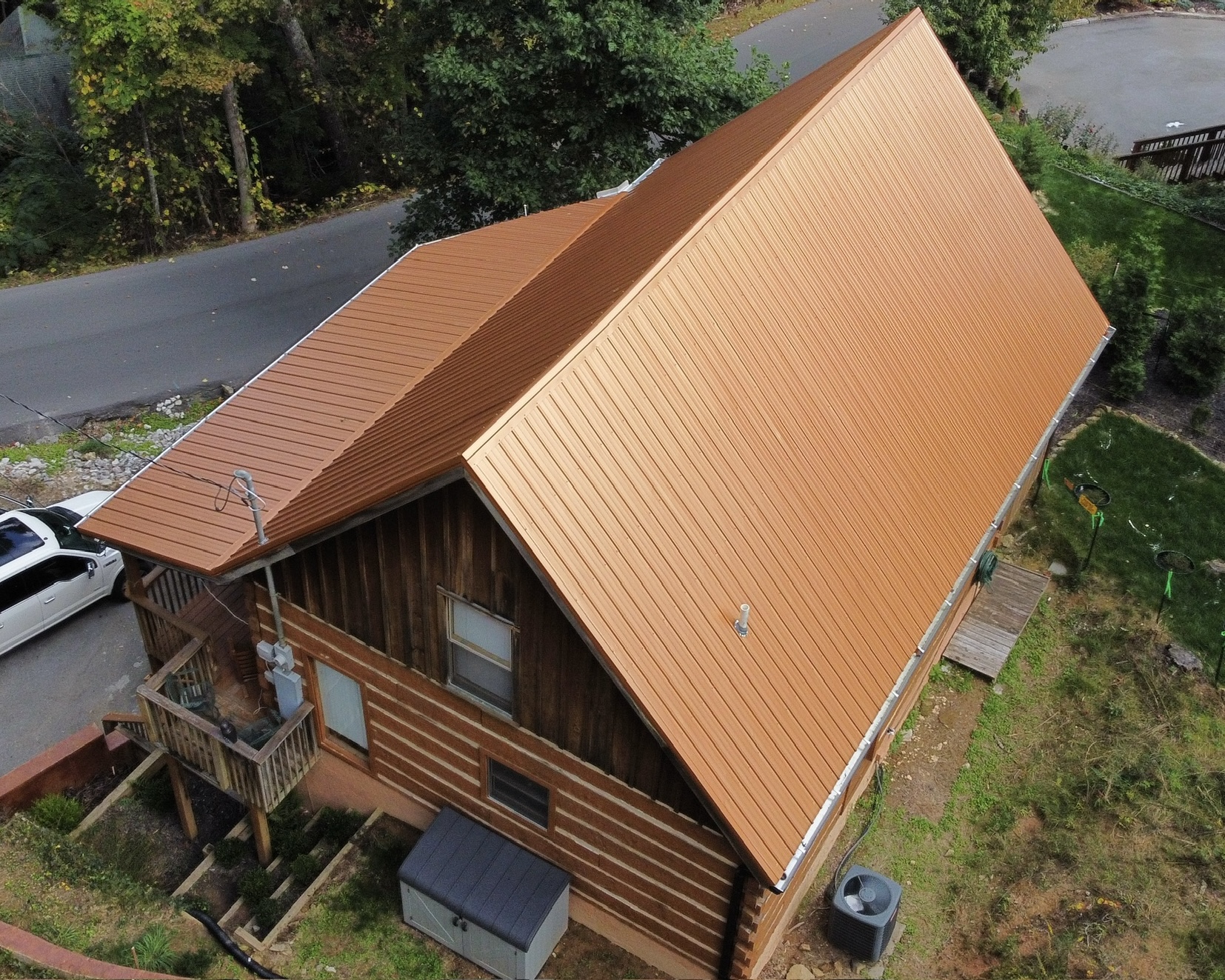
If you have ever stood under a barn roof during a hard rain, you probably remember the sound. That memory follows a lot of homeowners into metal roofing conversations. Around East Tennessee, rain can come down fast, and summer storms can feel loud on any surface.
We install metal roof systems in Knoxville homes every week. Here is what is true, what is not, and what actually changes what you hear indoors.
Myth: A Metal Roof Sounds Like A Drum
Most “tin roof” stories come from structures with open framing. Think sheds, porches, and barns. Those panels have very little between the metal and the room, so sound carries.
A house roof is built differently. Your metal roof sits on solid decking with underlayment. Then you have attic space, insulation, and a finished ceiling. Those layers do a lot of the work. In many homes, rain sounds similar to what you heard with shingles, just with a slightly different tone.
If you want to see the profiles we install, start here: metal roof systems we install.
Real Fact: The Roof Assembly Controls Most Of The Noise
The biggest difference is not “metal vs shingles.” It is the build under the panel.
A metal roof installed over solid decking will sound different than panels installed over open framing. Underlayment type matters too. Attic insulation levels matter. Even ceiling style can change what you notice.
If your home has skylights, you may already know this. Skylights can be the loudest spot in a storm, even with shingles, because sound passes through glass more easily than through an insulated attic and ceiling.
Myth: Hail Makes Metal Roof Noise Unbearable
Hail is noisy on anything. It is sharp and sudden. The fear is that a metal roof turns it into a nonstop rattle.
In most homes, the same layers that soften rain also soften hail. You may still hear it, but it usually is not the “can of pennies” sound people imagine. If your attic is thin on insulation, you will hear more from any roof type. That is one of the first things we look at during an estimate for metal roofing Knoxville, TN homes.
Real Fact: Popping Sounds Usually Come From Temperature Swings
East Tennessee weather can change quickly. Hot sun heats roof panels fast. Then a storm cools things down. Metal moves with those temperature swings. That movement can create small “ticks” or “pops.”
That does not automatically mean something is wrong. What matters is how the roof is detailed. A standing seam metal roof typically uses clips that allow controlled movement. A standing seam roof is also less likely to have fasteners backing out over time, since the fasteners are protected under the seams.
If you are comparing metal roofing contractors Knoxville, TN homeowners call for standing seam work, ask how panel movement is handled. The details matter more than the sales pitch.
What We Do To Keep A Metal Roof Quiet
We keep this practical. We look at your roof deck, your attic, and how your home is built. Then we build the system around that.
Here are a few things we focus on during install.
- Solid decking under the metal roof panels.
- Underlayment that adds a buffer and moisture protection.
- Clip and fastening choices that allow normal movement.
- Clean edges and tight transitions to reduce wind chatter.
You can get a clear picture of our process here: what to expect during your project. If you want to see how we approach the work across roofing types, visit our roofing contractor services.
Coverage And Next Steps
Noise myths fade fast once you understand the build. A metal roof can be calm in heavy rain, and stable through temperature swings, if the system is installed the right way.
Before you commit, review the roofing warranty details so you know what coverage you get. If you want to talk through your home, storm concerns, and standing seam options, contact Mountain View Exteriors.