
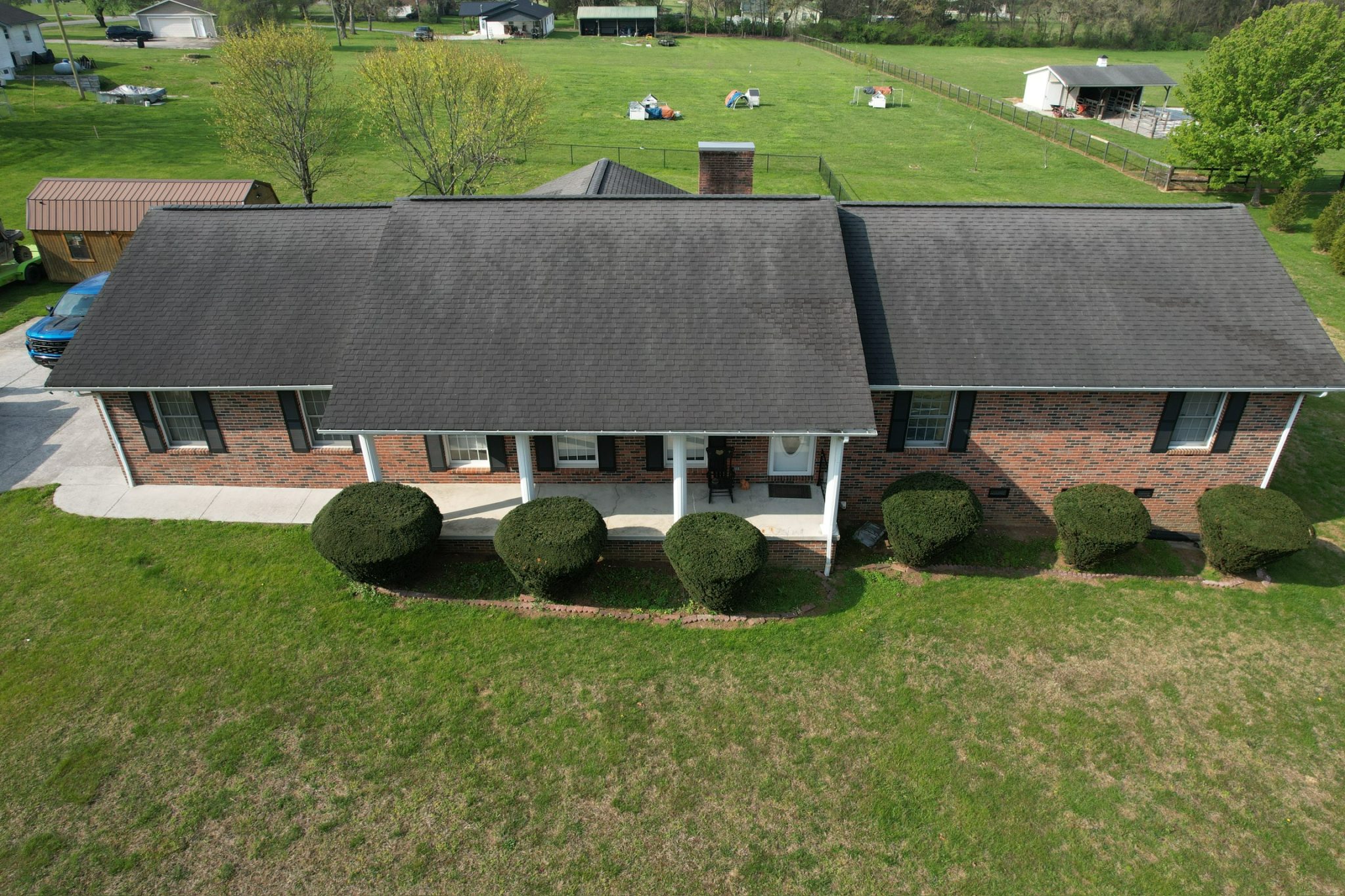
What Sun Exposure Does to Asphalt Shingles Over Time
Your roof takes a beating from the sun long before you see a leak. That is one reason asphalt shingles can look fine from the driveway while the roof surface is slowly aging above you.
Here in Knoxville, we see this often. Summer heat, direct UV exposure, heavy rain, humidity, and winter cold all work on a roof over time. Sun exposure does not usually destroy asphalt shingles overnight. It dries them out, fades them, hardens them, and makes weak spots more likely.
What Asphalt Shingles Are Built To Handle
Asphalt shingles are made to handle daily weather. They use asphalt as the waterproofing layer. They also have a surface layer of mineral granules pressed into the shingle.
Those granules do more than give shingles their color. They help block UV light from reaching the asphalt underneath. That matters because unprotected asphalt ages faster in direct sunlight.
If you are comparing asphalt roofing options, the type of shingle matters. Different types of asphalt shingles have different looks, weights, ratings, and warranty options. A thicker architectural shingle will usually handle aging better than a basic three-tab shingle.
Still, every asphalt roof depends on the same basic idea. Keep the asphalt covered. Keep water moving. Keep heat from building up under the roof deck.
How UV Rays Age Asphalt Over Time
UV light slowly changes the asphalt in a shingle. The asphalt can become stiffer as it ages. Once that happens, the shingle loses some of its ability to flex.
That is where problems begin.
Older shingles often crack, split, or curl because they cannot move as well through daily heating and cooling. A newer shingle can expand and contract without much trouble. A dry, brittle shingle is less forgiving.
This is why sun damage often shows up first on the roof slopes that get the strongest afternoon sun. South-facing and west-facing slopes can age faster than shaded areas. Darker shingles can also absorb more heat than lighter or reflective products.
Why Granule Loss Matters
Granule loss is one of the clearest signs that sunlight has started to win the fight. Once granules loosen or wash away, the asphalt below gets more direct exposure.
You might notice:
- Bald patches where the asphalt shows through.
- Dark or shiny spots on the roof.
- Faded or uneven shingle color.
- Loose granules in gutters or near downspouts.
- Curling edges or cracked shingles.
A few loose granules can be normal, especially on a newer roof. Heavy granule buildup is different. If you see a steady pile of granules washing out of the gutters, it is time for a closer look.
As a roofing contractor in East Tennessee, we pay attention to both the shingles and the gutters. Granules in gutters can tell us a lot about roof age, storm wear, sun exposure, and water flow.
Why Your Roof Gets Hotter Than The Air
An 88-degree Knoxville afternoon can mean a much hotter roof surface. Conventional roofing surfaces can reach 150 degrees or more on a sunny summer day.
That heat matters.
As the roof heats up, the materials expand. As the roof cools at night, they contract. This happens day after day. Over years, that movement can make old shingles curl, crack, loosen, or pull away from the seal strip.
Heat also affects the attic side of the roof system. Poor ventilation can trap hot air under the roof deck. That extra heat can add stress to the roof assembly. Good intake and exhaust ventilation help move hot air out and support better roof performance.
Why Knoxville Weather Adds More Stress
Knoxville roofs do not need desert-level heat to wear down from sun exposure. The long-term pattern is what matters.
Our area gets hot summers, plenty of rain, humid air, and winter freezes. Knoxville averages more than 50 inches of rain per year. It also sees many days at or above 90 degrees and many nights at or below freezing.
That means your roof deals with more than UV light. Summer sun can dry and harden asphalt shingles. Rain can wash loose granules into the gutters. Cold weather can make brittle shingles more likely to crack.
This is why a roof inspection can be helpful before small warning signs turn into bigger repairs.
When Sun-Aged Shingles Need Replacement
Sun-aged shingles do not always mean you need a full asphalt roof replacement. A few damaged shingles may be repairable if the rest of the roof is still in good shape.
Replacement becomes more likely when the wear is widespread. We look for broad granule loss, exposed asphalt, curling, cracking, missing shingles, weak seal strips, and leak signs inside the home.
If the roof is older and several slopes are showing damage, an asphalt shingle roof replacement may make more sense than chasing one repair after another. A full system also gives you a chance to address ventilation, underlayment, flashing, and warranty coverage together.
You can also review roofing warranty protection before choosing your next shingle.
Get A Clear Look At Your Roof
Sun exposure is part of owning a roof in East Tennessee. The goal is to know when normal aging has crossed into real damage.
If you see fading, curling, bald spots, cracked shingles, or granules in your gutters, we can take a closer look. You can start with a roofing estimateor contact Mountain View Exteriors to talk through what you are seeing.