
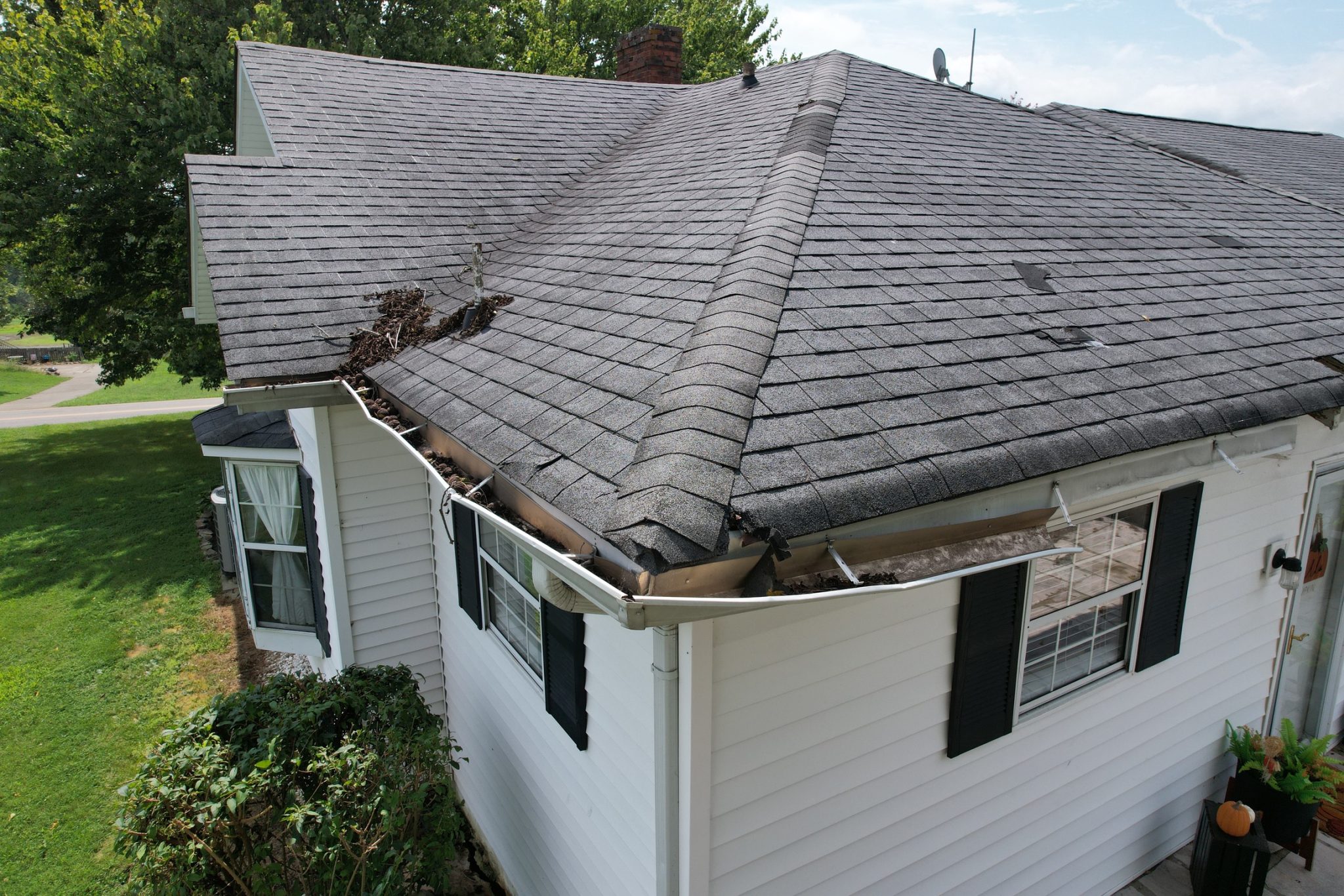
Noticing shingle edges lifting or turning upward can make you wonder how much life your roof has left. Curling shingles deserve attention, especially when the change is spreading. But curling alone does not tell you whether the roof needs replacement immediately. The roof’s age, the extent of the damage, and other warning signs all matter.
What causes shingles to curl?
Age and weathering. Over time, asphalt shingles change as they face sun, rain, and temperature swings. Persistent curling on an older roof can be one sign that the shingles are approaching the end of their useful life, particularly when it appears alongside cracking or bare spots.
Moisture and ventilation problems. Moisture can contribute to curling and other roof deterioration. Attic ventilation is one factor a roofer should evaluate, but a curled edge does not prove that ventilation is the cause. The shingles and the conditions beneath them need to be considered together.
Installation or underlying irregularities. Raised fasteners, wrinkled underlayment, or shingles bent before installation can create lifted areas that resemble curling. A professional assessment helps distinguish those problems from general aging.
Temporary cold-weather changes. Some slight curling is seasonal. Shingle edges may curl slightly during early aging, look more pronounced in cold weather, and flatten as temperatures rise. That is different from severe, persistent distortion.
When should homeowners be concerned?
Look at the overall pattern. A small change in a few shingles calls for a different evaluation than curled edges across several roof slopes. Signs worth bringing to a roofer’s attention include:
- Curling that keeps getting worse or remains in warm weather.
- Cracked, torn, loose, or missing shingles.
- Widespread loss of the protective granules, especially visible bare patches.
- New ceiling stains, damp attic areas, or an active leak.
Curling, cracking, missing shingles, and excessive granule loss are signs that a roof needs attention. You do not need to wait for a ceiling stain before asking for help. If water is already entering your home, seek prompt professional assistance.
What should you do next?
Start with photos taken safely from the ground, using your phone’s zoom if needed. Note where the curling appears, when you first noticed it, and whether it followed a storm or changes with the weather. Gather any records showing the roof’s installation date.
Leave climbing and hands-on checks to a roofing professional. Avoid trying to flatten, nail down, or glue shingles yourself; the appropriate response depends on what is causing the problem.
Does curling mean you need a new roof?
Not always. An isolated issue may be repairable, while widespread deterioration on an aging roof may make replacement the more practical choice. Ask what the assessment found, how much of the roof is affected, and why the recommended approach makes sense. If replacement is appropriate, explore our asphalt roofing options.
Worried about your roof? Contact Mountain View Exteriors for a free roof replacement estimate. You can also fill out our callback form to tell us about your roof and arrange the next step.